 Nederland
 Belgique (Français)
 Deutschland
 Finland
 Ireland
 Luxembourg
 Portugal
 Poland
 Österreich
 France
 España
 Italia
 Sverige
 Danmark
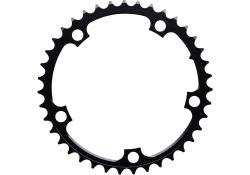
Plateau Rotor Q-ring OCP3 Aero
Plateau Rotor Q-ring OCP3 Aero

Auriez-vous aimé avoir plus de photos qui montrent ce produit ?
Malheureusement ce produit est épuisé et il ne sera plus disponible dans notre assortiment.


Posez une question sur ce produit

Tester en magasin
Une grande partie de notre assortiment est en stock dans nos magasins et prêt à être essayé, ajusté et testé sans rendez-vous.
Notre assortiment complet est disponible en ligne. Vous pouvez commander et payer des produits en ligne et les faire livrer gratuitement dans l'un de nos Superstores. Ainsi, vous pouvez tout essayer. Pas satisfait ? Vous pouvez les retourner gratuitement en magasin et être remboursé.
Est-ce que ces informations vous ont aidé ?
Caractéristiques techniques
Caractéristiques techniques
| Marque | Rotor | |
| Raccord | Shimano / SRAM | |
| Nombre de vis de plateau | 5 | |
| Type de plateau | Grand plateau | |
| Type de pédalier | Compact | |
| Couleur | Noir | |
| Combinaison recommandée | 50/34 | |
| Pédalier Shimano | Ultegra / Dura Ace / 105 | |
| Pédalier Sram | Apex / Force / Red / Rival |
The thoughts behind Rotor:
The thoughts behind the Rotor Q-Ring / QXL chainring are clear: each pedal movement has a 'dead center'. This is the moment when your cranks sit vertically. At this point there is no possibility to keep pressure on your crank/pedals what makes you get beyond this point as fast as possible. Rotor Q-Rings have less teeth on its dead center what makes you go faster past this point. The next thing that happens is that you feel maximum resistance, at this point you can get maximum power out of your rotation. By this theory you will pass your dead center faster what ensures less power loss before you point of maximum power. This allows a efficient pedal movement which creates less lactate and fatigue.
The technology behind the rotor is characterized by efficiency. Rotor believes in fact that its products are initially not so much 'faster' but it's mostly the efficient pedal movement what the actual net time improves, this means your time trial time will be faster.
Several scientific studies have proven the positive effect of Rotor Q-Rings / QXL chainRings. Perhaps even the best proof is the many victories achieved in the pro peloton on Rotor Q-Rings / QXL-Rings.
The thoughts behind the Rotor Q-Ring / QXL chainring are clear: each pedal movement has a 'dead center'. This is the moment when your cranks sit vertically. At this point there is no possibility to keep pressure on your crank/pedals what makes you get beyond this point as fast as possible. Rotor Q-Rings have less teeth on its dead center what makes you go faster past this point. The next thing that happens is that you feel maximum resistance, at this point you can get maximum power out of your rotation. By this theory you will pass your dead center faster what ensures less power loss before you point of maximum power. This allows a efficient pedal movement which creates less lactate and fatigue.
The technology behind the rotor is characterized by efficiency. Rotor believes in fact that its products are initially not so much 'faster' but it's mostly the efficient pedal movement what the actual net time improves, this means your time trial time will be faster.
Several scientific studies have proven the positive effect of Rotor Q-Rings / QXL chainRings. Perhaps even the best proof is the many victories achieved in the pro peloton on Rotor Q-Rings / QXL-Rings.
Produits similaires
Produits similaires

|
|
|

|
|
| Rotor Q-ring OCP3 Aero | SRAM Road V1 | SRAM Red 2012 X-Glide Hidden Bolt | SRAM Road V2 | |
| 12 avis | 2 avis | 6 avis | ||
| Raccord | Shimano / SRAM | SRAM | SRAM | SRAM |
| Nombre de vis de plateau | 5 | 5 | 5 | 5 |
| Entraxe | 130 mm / 110 mm | 110 mm | 110 mm | 110 mm |
| Type de plateau | Grand plateau | Petit plateau | Petit plateau | Grand plateau |
| Nombre de dents | 50 / 53 | 34 / 38 | 34 | 50 |
| Type de pédalier | Compact | Compact | Compact | Compact |
| A partir de 89,95 | A partir de 15,95 | 26,95 | 34,95 | |
| Ce produit | Voir le produit | Voir le produit | Voir le produit |